


Our deaerators
Designed smarter, built better.
We realize the best deaerator types for your project. Worldwide.
German Engineering | Estonian Experience | European production
What is deaeration?
Enhancing the lifespan and design efficiency of steam-generating boilers involves mitigating internal corrosion. This goal is accomplished by minimizing the dissolved oxygen in the water-steam cycle, a process known as deaeration. Deaeration, in general, refers to removing dissolved air from a gas or liquid. Thermal deaeration is presently the predominant method for deaeration in industrial boilers, surpassing chemical techniques due to its effectiveness in regulation, efficiency, and cost optimization.
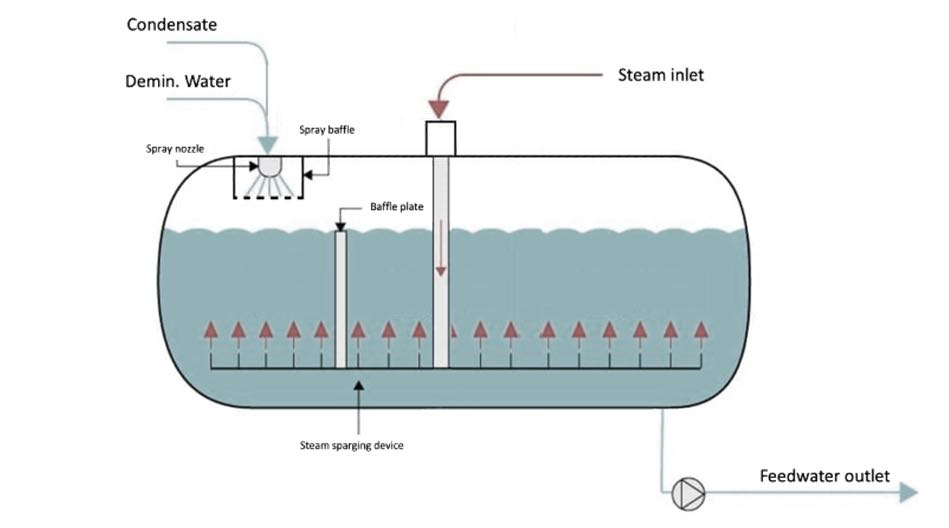
For thermal deaeration, the water saturated with oxygen must be brought into contact with steam. The more water surface contacts the steam, the more complete the deaeration process will be. In an industrial or utility water-steam-cycle behind a boiler this is done in a deaerator vessel or feedwater tank.
While the overall design of deaerators has remained relatively consistent for the past few decades, their applications have significantly expanded due to the adoption of energy-efficient technologies and new energy sources.
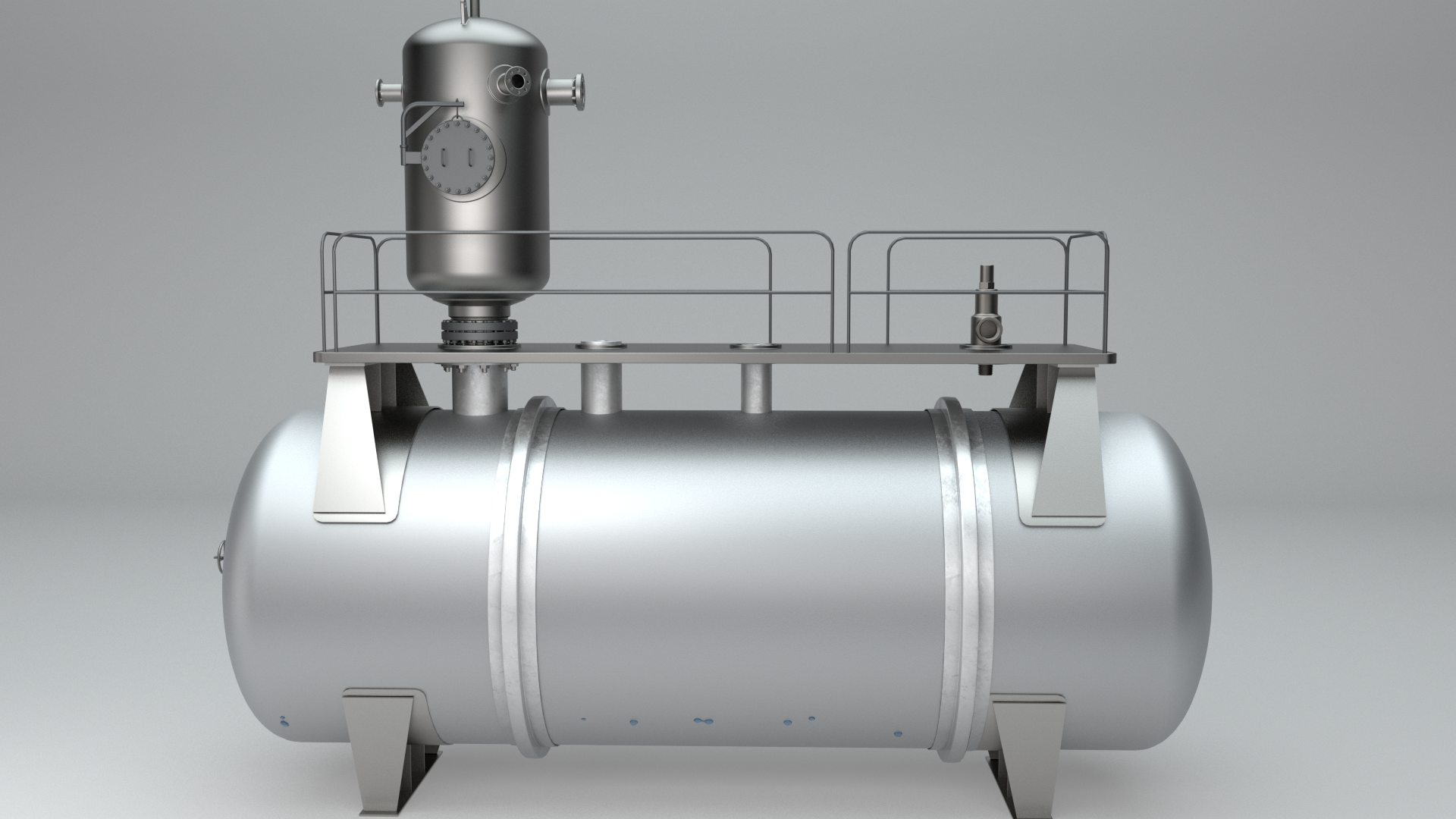
The tray-type deaerator
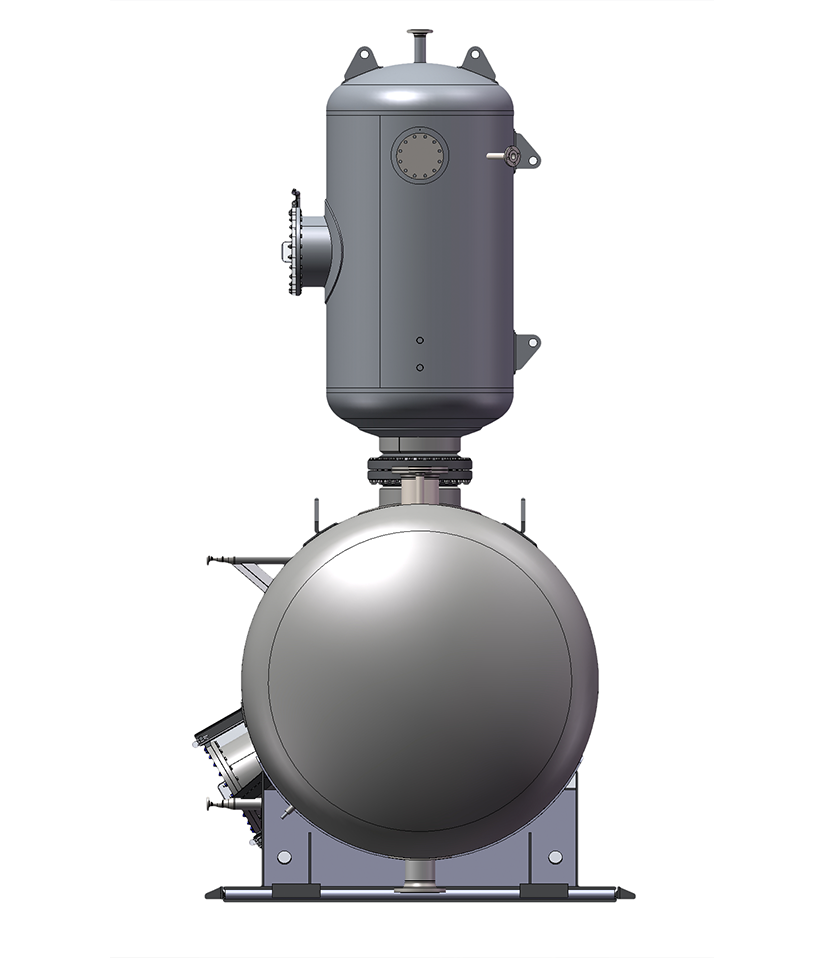
The operating principle of the tray type deaerator is schematically shown on the pictures.
Cold condensate enters via water inlet into the dome section, via several small sprayers. From there, the water is collected by the first tray, which is partly perforated and lets the water trickle down to the next tray.
Between the trays, the steam comes into contact with the water, counter-flowing from below to the top of the tank.
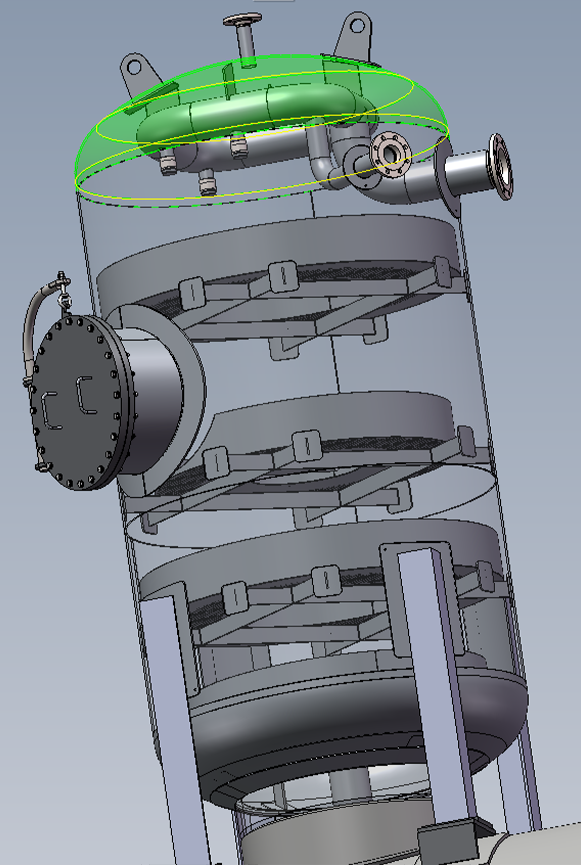
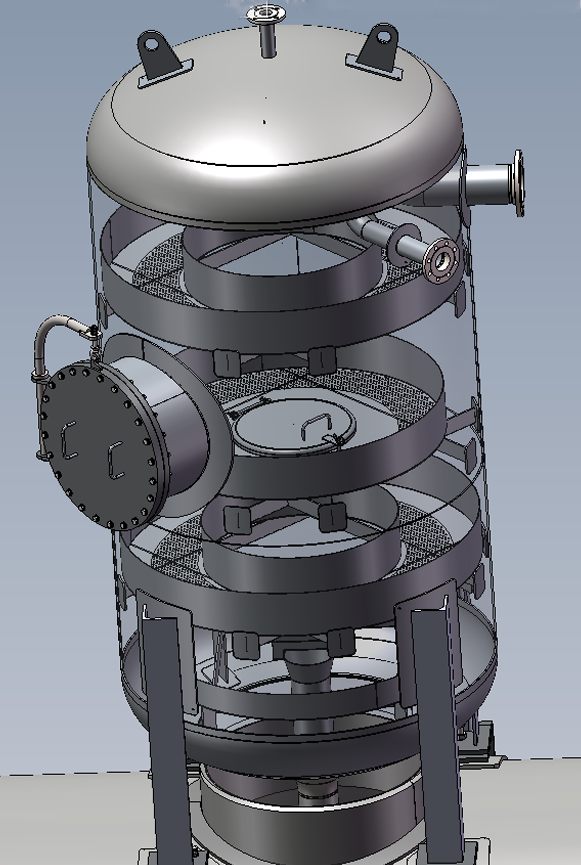
The water leaves the top tank and flows down to the storage tank via its opening in the bottom. The storage tank can contain a steam distribution under water, similar to the spray-type deaerator, to polish the result.
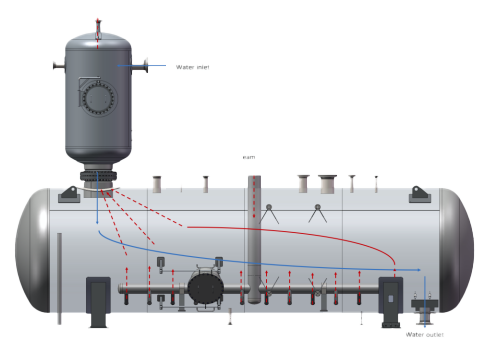
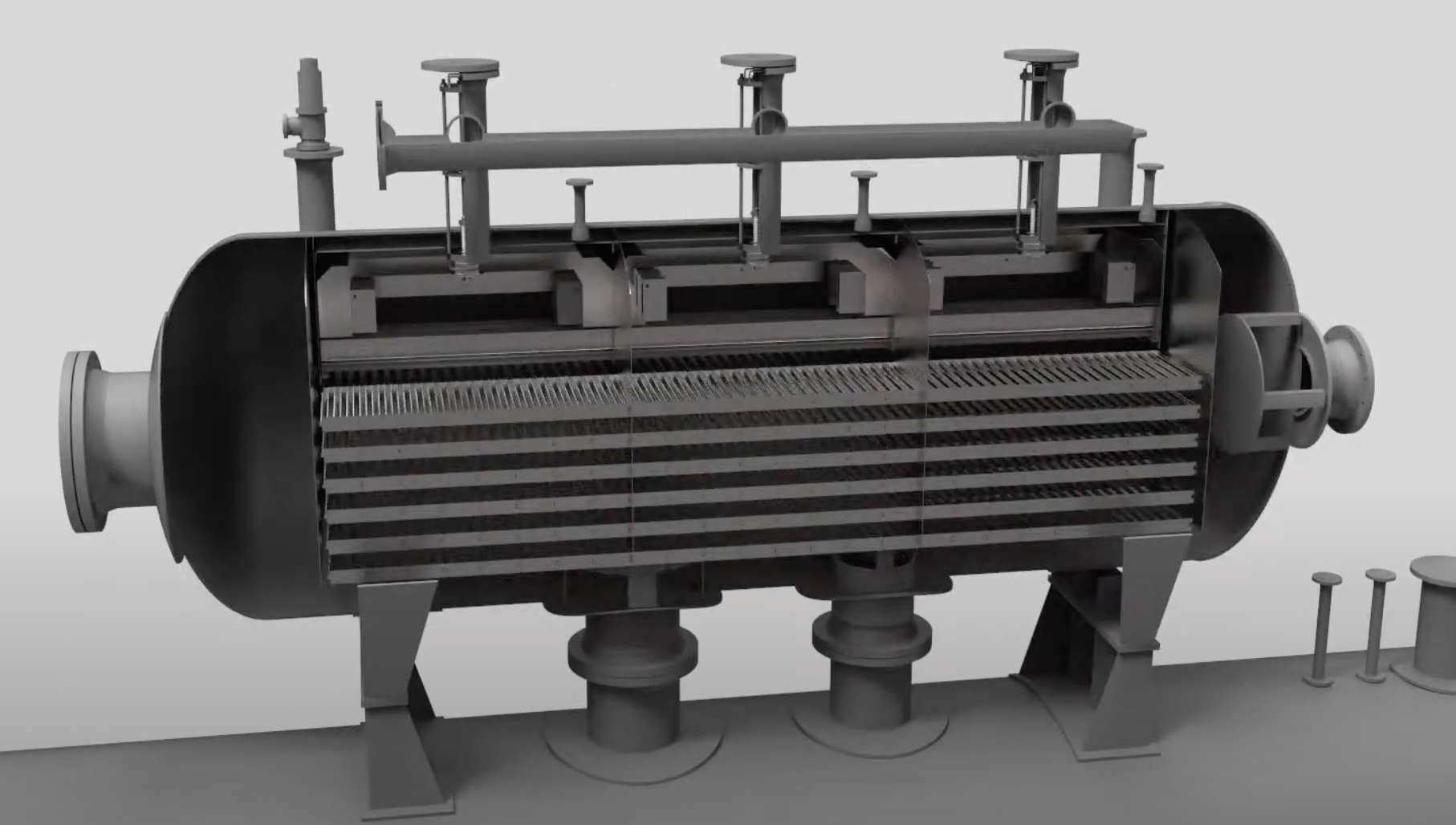
The US version of the Tray-type
With US EPCs and power plant operators, a variant of the tray-type system above is commonplace, which uses a horizontal top tank with several boxes of stainless steel tray stacks inside, through which the water cascades down, and the steam comes into contact with the dripping water counter-flowing.
Which Information do we need from you to calculate an offer?
Ideally, we would get the following 6 pieces of information from you:
General design data:
Design code (ASME / PED / Other)
Design pressure (barg)
Operating pressure (bara) or feedwater outlet temperature
Required performance / oxygen content in feetwater (e.g. 7 ppb / 10 ppb / 20 ppb)
Required storage capacity (either in minutes of hold-up time, or in m3), storage capacity is the water volume between normal water level (NWL) and low water level (LWL)
6. Normal / minimal / maximal operating case:
Incoming condensate flow (t/h)
Incoming condensate temperature (deg. C)
If applicable: Make-up water flow and temperature
Steam available: max flow, temperature, pressure
For a good calculation we need three cases, nominal, minimal and maximal loads. If you have only one nominal or max case for a budget, we can also do a calculation based only on one case and assume the rest. If you have any additional operating cases available, for example a turbine bypass case or a startup case, please also provide those.
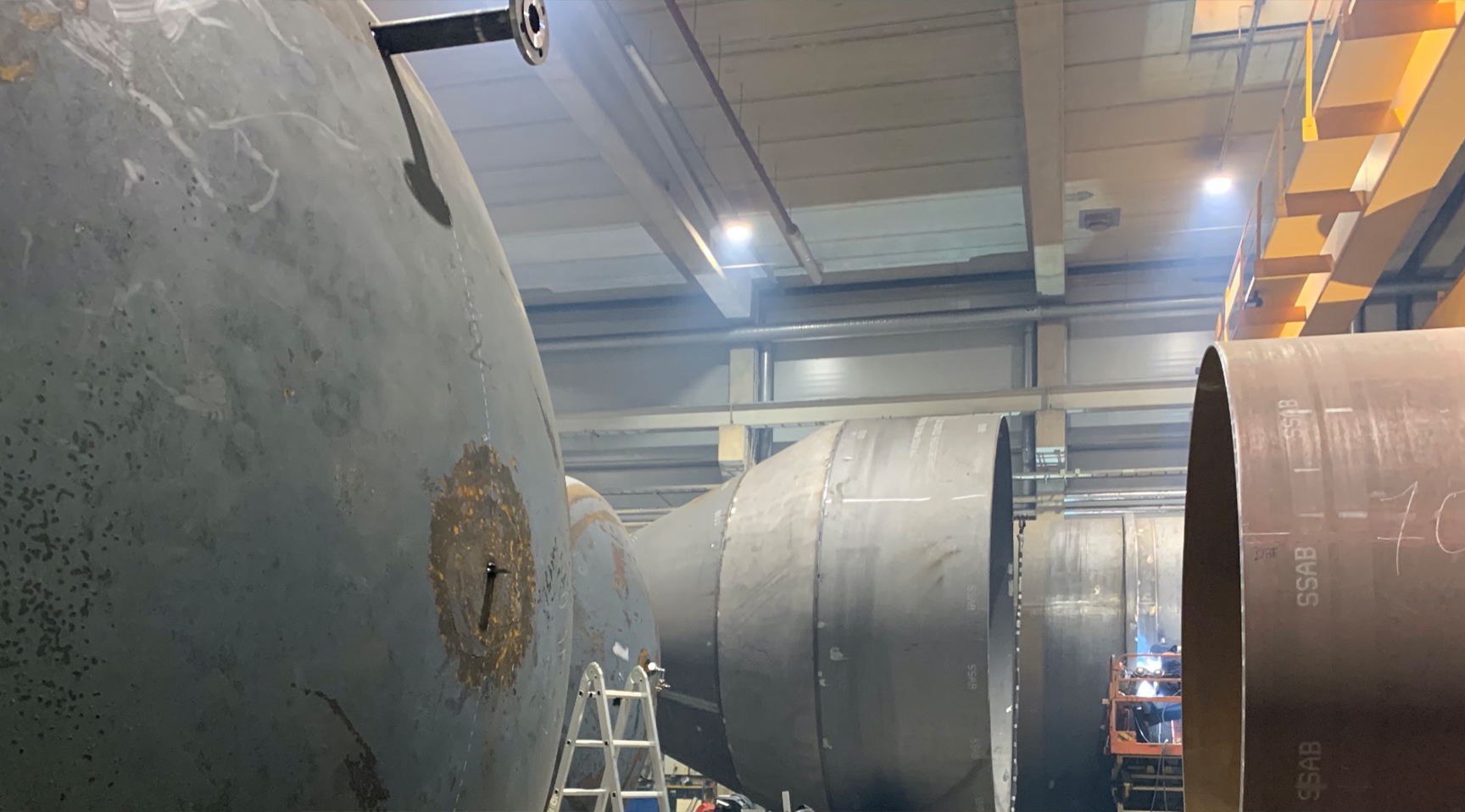
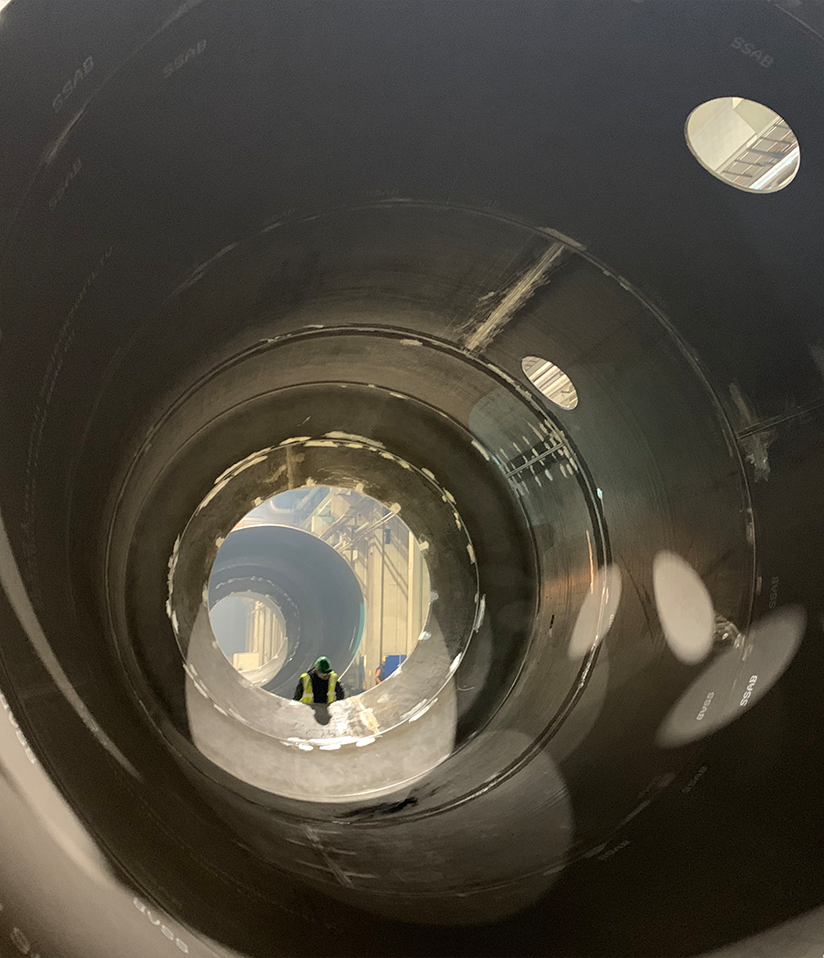
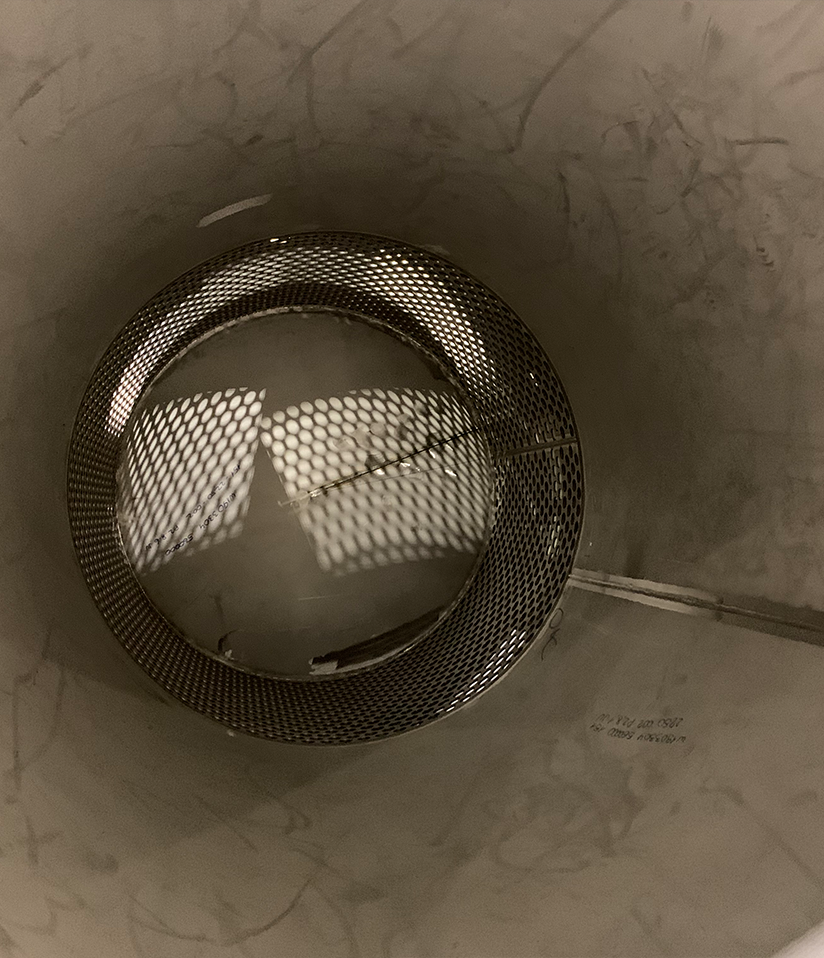
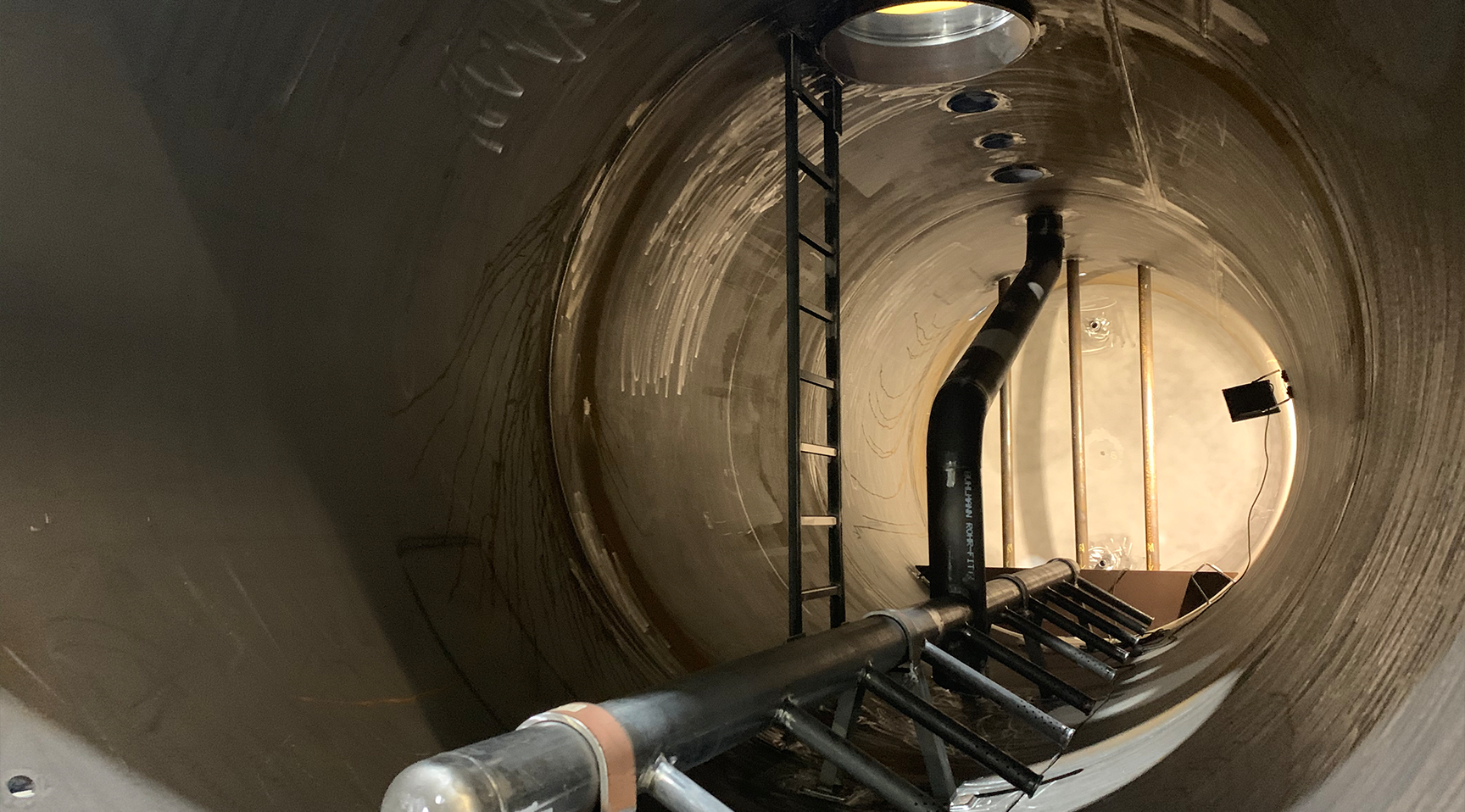
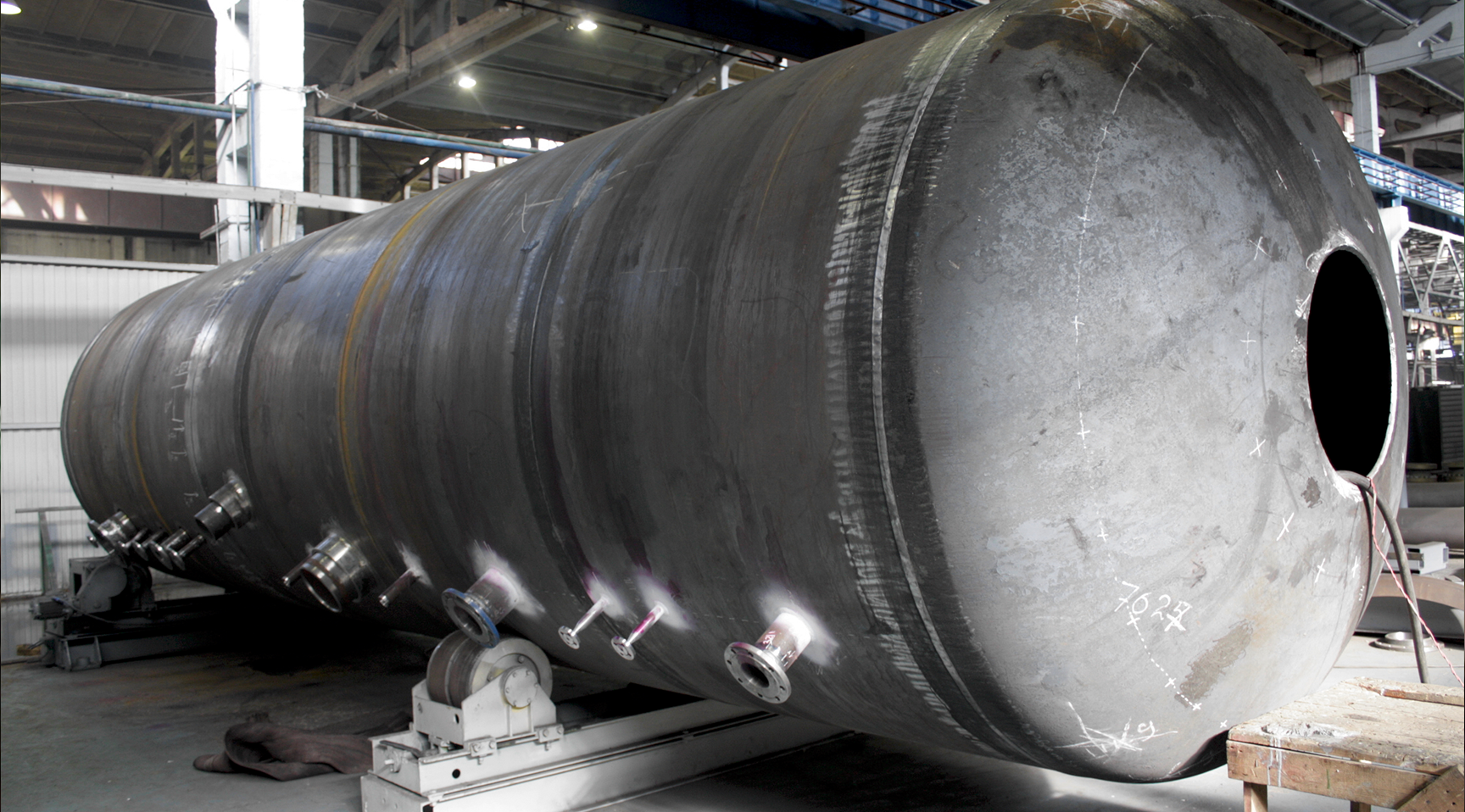
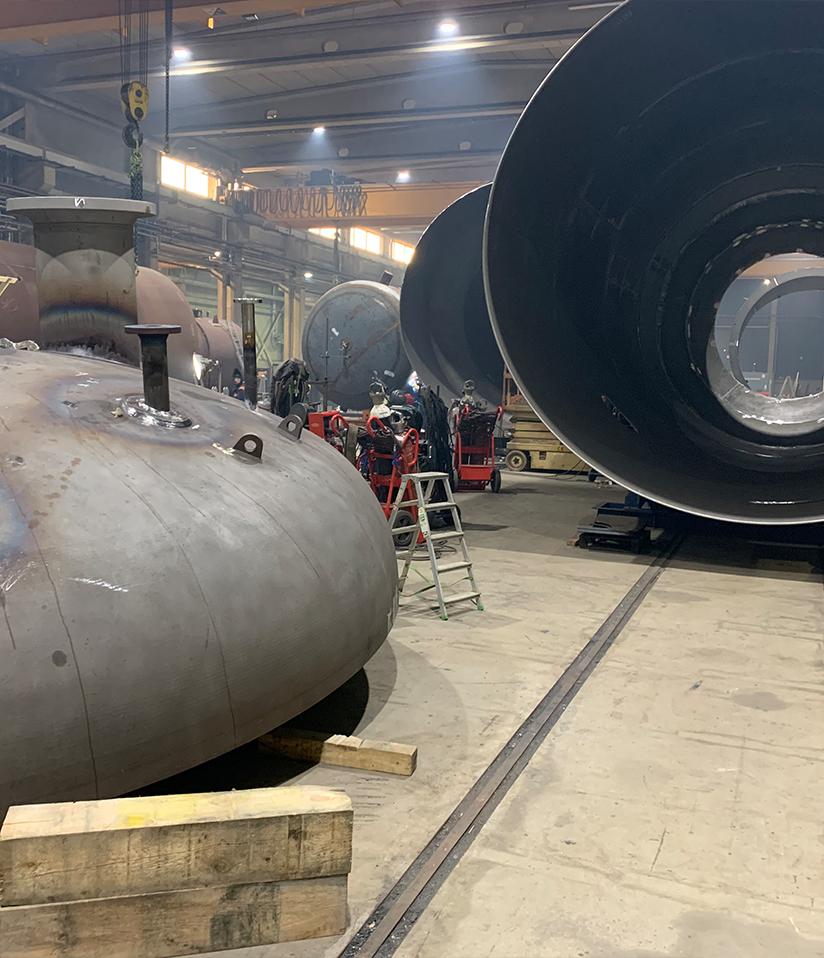
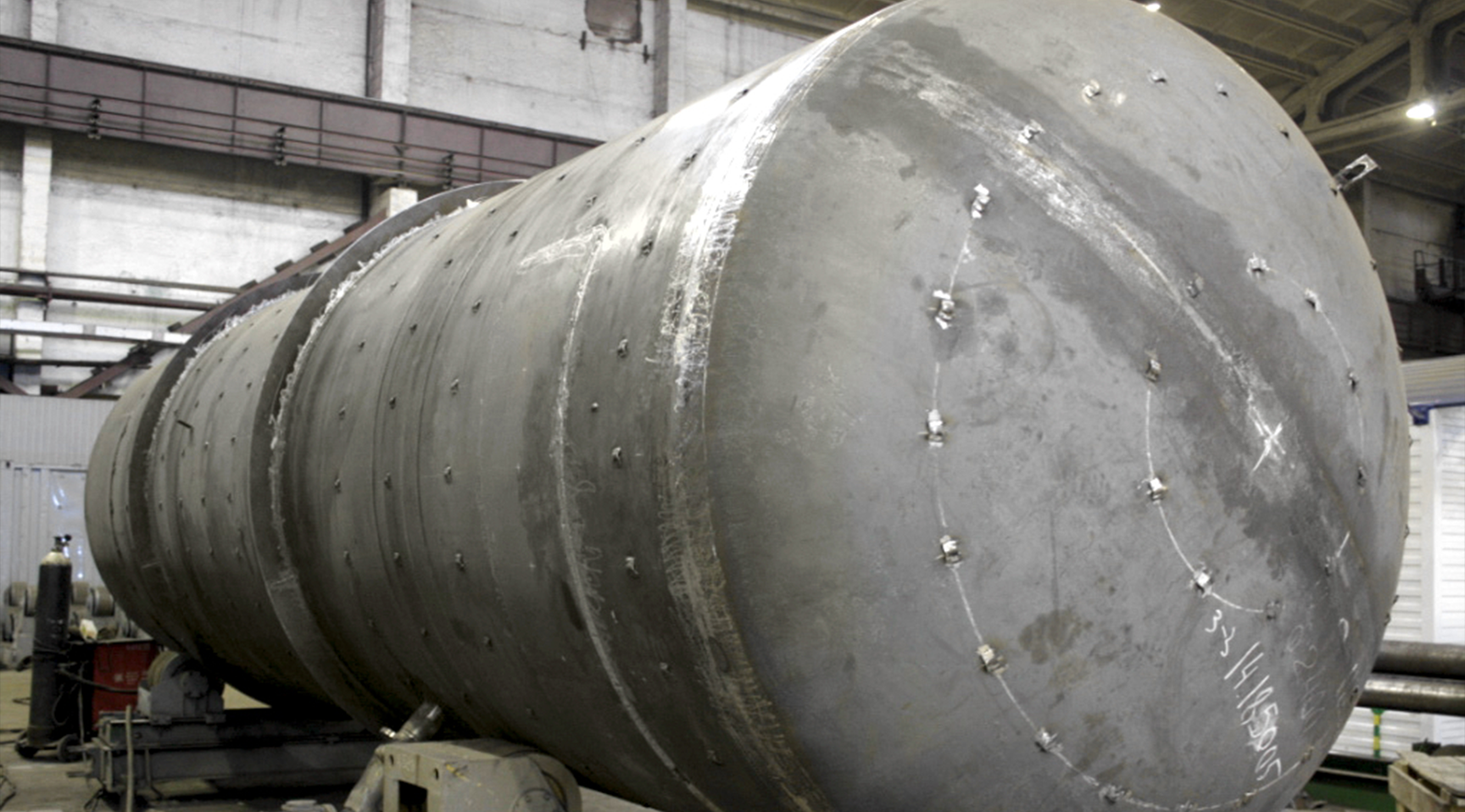
Production examples
If you need a deaerator for your system, please contact us. We find the ideally fitting design with you, and offer accordingly.